Data Center Power Constraints Limit Growth
U.S. data centers are projected to grow from ~4% of total electricity consumption today to 8–12% by 2030. Power availability and interconnection timelines are now the primary determinants of data center site viability. About 46% of new data centers require transmission upgrades to reach full capacity.
Why Speed-to-Grid is a Data Center’s Leading Bottleneck
“Speed-to-grid,” or how fast a data center can get enough reliable power to actually operate, is often the main bottleneck that new or expanding data centers face. Today, speed-to-grid is essential because power access is now the scarcest resource in data center development. The faster data centers can secure and deliver reliable power, the faster they can monetize—and in today’s AI race, timing is everything. Here’s why:
-
Demand is outpacing power infrastructure: A single large data center campus may need hundreds of megawatts—potentially as much as a small city. The electric grid—long outdated and increasingly overstrained—was not built for the pace of demand.
-
Interconnection Queues Are Backlogged: Many interconnection queues are delayed by the need for new transmission lines, substation upgrades and grid reinforcement studies. In many regions, interconnection can take 5–10 years.
-
Revenue is gated by power, not construction: A data center shell can be built in 12–24 months. But if power isn’t available, it just sits idle. No power = no servers running = no revenue.
Battery Storage 101
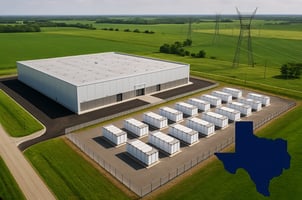
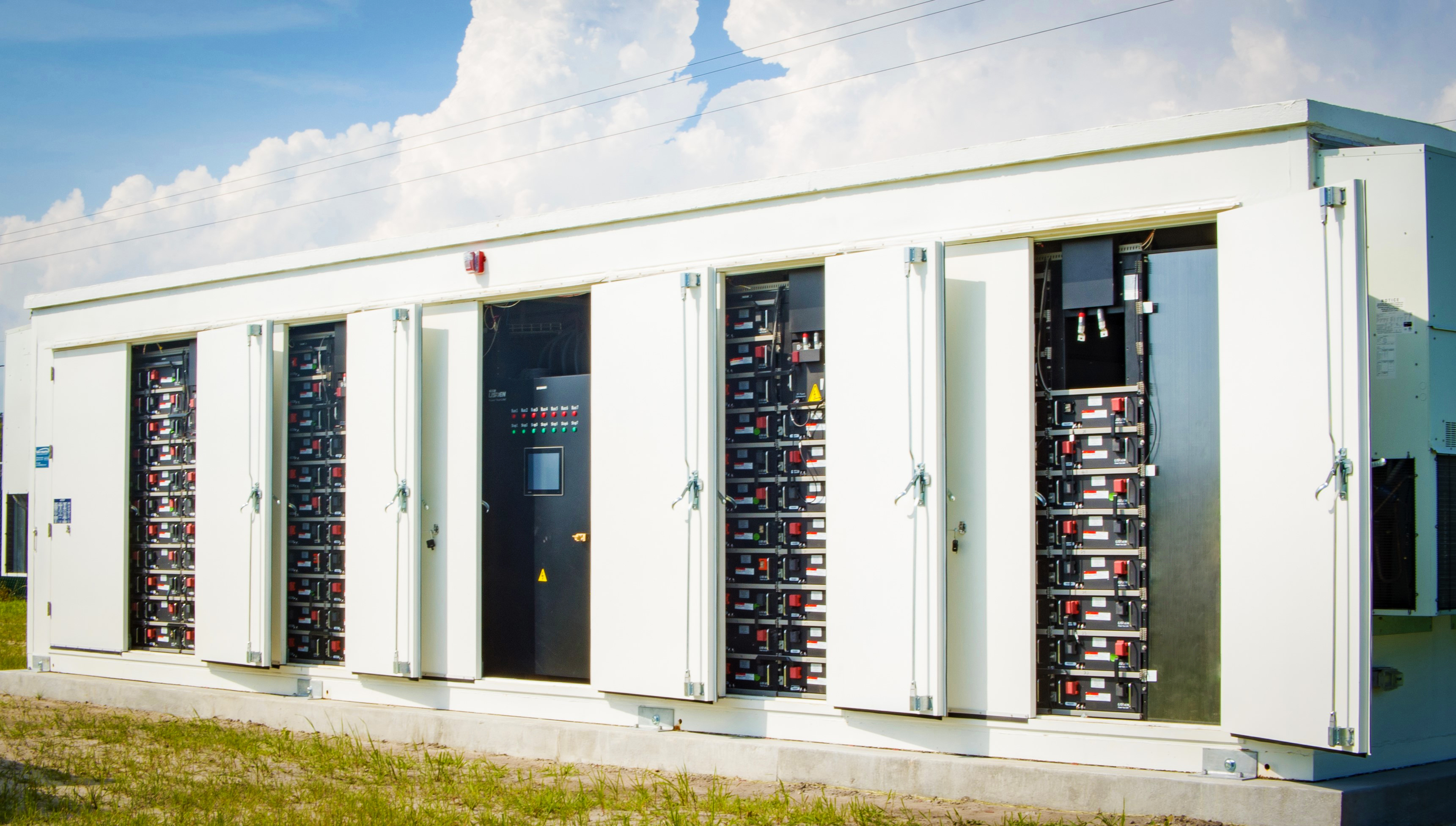
Energy storage systems allow electricity to be stored—and then discharged—at the most strategic times. Today, Lithium-ion batteries, the same batteries that are used in cell phones and electric vehicles, are the most commonly used type of energy storage. Like the batteries in your cell phone, industrial-scale battery energy storage systems can be charged with electricity from the grid, stored, and discharged when there is a deficit in supply or when energy is most expensive.
Data centers’ scale, growth rate, and power-quality requirements mean co-located battery energy storage systems are no longer optional — they are foundational to continued expansion.
How Battery Storage Helps Data Centers Accelerate Speed to Grid
Battery storage has quietly become one of the most practical tools for improving speed-to-grid, because it helps work around the grid’s biggest constraint: delivering large amounts of power instantly and continuously.
1) Battery storage lets data centers use existing grid capacity more effectively. In many places, the grid can support a data center—just not at full, always-on load. A battery can:
-
Charge when the grid is underutilized (off-peak hours)
-
Discharge during peak demand when the data center needs it most
-
Shave years off deployment
2) Battery storage reduces or avoids costly transmission upgrades. Batteries can act as a shock absorber for additional demand, which can:
-
Smooth sudden spikes in demand
-
Limit how much the site “looks like” it’s pulling from the grid at any moment
-
Avoid triggering major upgrades
-
Move data centers through the interconnection queue faster
3) Battery storage enables “bridge power” while data centers wait for full interconnection. By adding battery storage to your data center, you can interconnect at a lower capacity earlier. Battery storage (often paired with generators) means:
-
You build the data center now, and interconnect in less time than you would otherwise
-
As grid upgrades come online, you may rely less on the battery
-
Access revenue years earlier
4) Battery storage helps meet permitting constraints. Utilities are more willing to approve projects that don’t create instability and can ride through disturbances. Batteries provide peak shaving and demand response, reducing grid usage during peak times. This can make a data center interconnection application:
-
Less risky from a grid-operator perspective
-
Easier to approve
5) Battery storage helps navigate emissions rules and permitting constraints. In some regions, you can’t just add diesel or gas for interim power due to emissions rules. Battery storage reduces reliance on fossil fuel “peaker” plants, which can:
-
Accelerate permitting approval
-
Improve community acceptance, which can also help with permitting approval
-
Enabling higher renewable penetration
The Bottom Line: Battery Storage Accelerates Speed-to-Grid
With on-site battery storage, data centers can start sooner, smooth demand, and scale up over time. A good analogy here would be to think of the electric grid as a highway with limited lanes.
-
Without batteries → data centers need to wait for the highway to be widened
-
With batteries → data centers can add a “buffer lane” so traffic can flow now, even if the highway isn’t fully expanded yet.
Convergent Energy and Power: Proven Battery Storage Expertise
Waiting too long to develop a co-located battery storage system can mean even longer interconnection timelines, higher costs, and reduced flexibility to meet compliance requirements. Data centers that act now will be positioned to lock in savings before battery prices rise as a result of FEOC, ensure operational readiness, and avoid getting caught in the next wave of grid congestion.
For 15 years, Convergent Energy and Power (Convergent) has gained deep expertise by working closely with industrial businesses to take the hassle out of on-site renewable solutions by building, owning, and operating systems on our customers’ behalf.
Convergent has over 900,0000 hours operating energy storage systems that deliver peak shaving and grid reliability and have reduced our customers’ utility bills by up to 40%. Further, we have $1bn invested in or committed to energy storage systems, with over 800 MW operating or under development.
If you’re looking to supercharge your path to power with an on-site battery storage system and partner with a deeply experienced partner, schedule a free, no-obligation introductory call with our team today