.png?width=960&height=144&name=What%20Data%20Centers%20Need%20to%20Know%20About%20Battery%20Storage%20Supercharge%20Your%20Path%20to%20Power%20with%20Convergent%20(1).png)
Power availability and interconnection timelines are now the primary determinants of data center site viability.
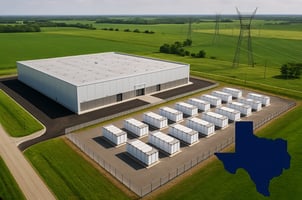
Today, interconnection queues increasingly determine how quickly data centers can reach commercial operation. In PJM, MISO, and parts of ERCOT, transmission-level load additions can face four- to eight-year timelines, with additional uncertainty tied to required network upgrades. In too many cases, full grid capacity is not immediately available at energization.
Data centers’ scale, growth rate, and power-quality requirements mean co-located battery energy storage systems (BESS) are no longer optional — they are foundational to continued expansion.
Battery energy storage systems can be deployed faster than any other grid asset, providing peak-shaving, load-shifting, and demand-response capabilities that strengthen reliability now—not a decade from now.
For decision makers at data centers, battery energy storage represents the most effective way to accelerate your path to power, strengthen reliability, manage energy during peak demand periods, and minimize any negative impacts from mandatory or voluntary curtailment.
Data centers’ scale, growth rate, and power-quality requirements mean co-located battery storage systems are no longer optional — they are foundational to continued expansion.
Battery Storage 101
Energy storage systems allow electricity to be stored—and then discharged—at the most strategic times. Today, Lithium-ion batteries, the same batteries that are used in cell phones and electric vehicles, are the most commonly used type of energy storage. Like the batteries in your cell phone, industrial-scale battery energy storage systems can be charged with electricity from the grid, stored, and discharged when there is a deficit in supply or when energy is most expensive.
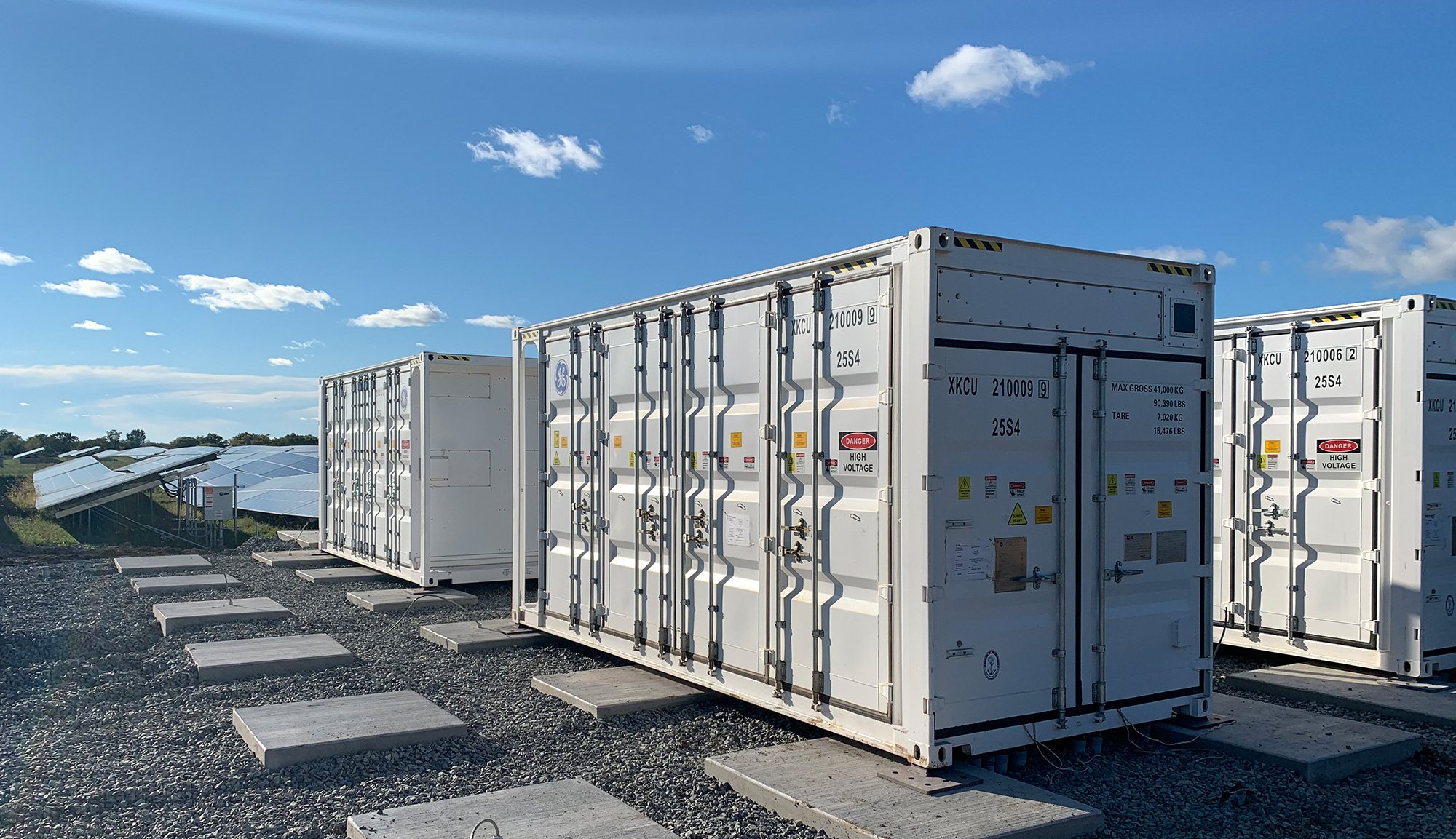
Adding a battery storage system allows your data center to:
⏩ Accelerate first power by reducing peak grid-draw
🔓 Unlock and accelerate capacity for new developments or site expansions while easing interconnection approvals by reducing grid strain during peak demand
✅ Comply with curtailment events by relying on stored energy during grid stress to either meet curtailment obligations or transition over to backup generators
🔌 Maintain power quality and uptime through ride-through support, ramp-rate smoothing, and seamless bridging during grid outages or switchovers
💪 Enhance power performance by stabilizing nonlinear loads
⬇️ Reduce peak energy costs by storing electricity when it’s inexpensive and discharging when prices surge
💰 Pass savings to tenants or retain them internally to strengthen competitiveness
Battery storage allows facilities to store electricity and dispatch it when demand is highest, turning a potential cost into a strategic advantage. Unlike diesel backup generators, battery storage works continuously, optimizing daily energy use, not just responding to emergencies.
The Case for Acting Now
Without on-site battery storage, data centers are fully exposed to:
- Interconnection delays or capacity limitations due to grid congestion
- Power quality issues from voltage fluctuations or sudden grid events
- Community and regulatory scrutiny around grid strain and emissions
The Benefits of Battery Storage
Battery storage can serve as a strategic bridge to “first power” by reducing peak grid draw, smoothing ramp rates, and limiting the immediate impact of large-load additions. By lowering net demand at critical intervals, battery storage can help align load growth with available grid capacity, potentially enabling phased energization while longer-term transmission upgrades are completed. This approach can support tenant onboarding without waiting for full transmission build-out.
In addition to resiliency support, battery storage reduces exposure to peak, demand, and capacity charges by shaping load profiles and managing coincident peaks. Battery storage can also reduce generator runtime by handling fast-response events and short-duration disturbances, preserving backup assets for true outage scenarios. The result is improved operational flexibility, reduced reliance on thermal assets for transient events, and enhanced power quality, strengthening overall reliability while maintaining compliance with large-load or demand response programs
Battery storage changes the equation by giving data center operators control over when and how they use grid power—without sacrificing five-nines commitments or tenant satisfaction.
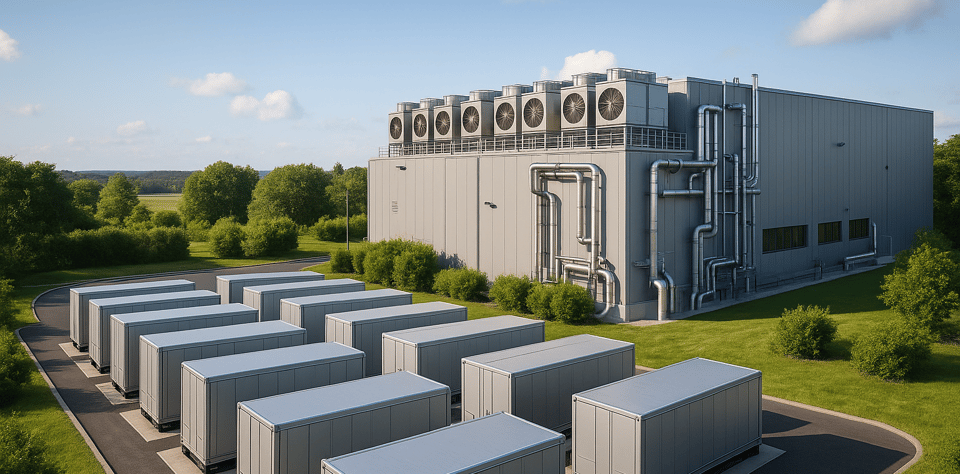
Why Traditional Power Solutions Don’t Work
Traditional power solutions won’t work because:
- On-site generation is slow, costly, and infrastructure-heavy
- Diesel generators are facing increasing emissions scrutiny and offer limited operational flexibility
- UPS-only architecture is designed to cover only very short durations
This is why battery storage has become mission critical to both getting online and staying there.
Convergent Energy and Power: Proven Battery Storage Expertise
Waiting too long to develop a co-located battery storage system can mean even longer interconnection timelines, higher costs, and reduced flexibility to meet compliance requirements. Data centers that act now will be positioned to lock in savings before battery prices rise as a result of FEOC, ensure operational readiness, and avoid getting caught in the next wave of grid congestion.
For 15 years, Convergent Energy and Power (Convergent) has gained deep expertise by working closely with industrial businesses to take the hassle out of on-site renewable solutions by building, owning, and operating systems on our customers’ behalf.
Convergent has over 900,0000 hours operating energy storage systems that deliver peak shaving and grid reliability and have reduced our customers’ utility bills by up to 40%. Further, we have $1bn invested in or committed to energy storage systems, with over 800 MW operating or under development.
If you’re looking to supercharge your path to power with an on-site battery storage system and partner with a deeply experienced partner, schedule a free, no-obligation introductory call with our team today.