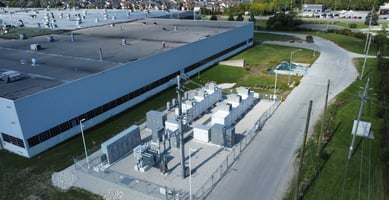
The Mid-Atlantic region just experienced a brutal early-summer heat wave that pushed the PJM, the grid operator for the mid-Atlantic, to its limits. With multiple days of soaring demand, sky-high prices, emergency alerts, and overlapping Demand Response (DR) events, energy managers and customers across the region faced a perfect storm. These conditions weren’t just uncomfortable—they were potentially costly, risky, and increasingly unmanageable without the right tools in place. For commercial and industrial energy users, municipalities, and electric co-ops, this wasn’t just a weather event—it was a wake-up call.
At Convergent Energy and Power (Convergent), these kinds of grid stress events aren’t just a validation of our value proposition—they’re a real-time demonstration of the critical role battery energy storage can play in delivering resilience, reliability, and cost savings.
Here’s a look at what happened—and why now is the time to act.
Quick Review: Energy Storage 101 (skip if you know this already!)
Energy storage systems allow electricity to be stored—and then discharged—at the most strategic times. Today, Lithium-ion batteries, the same batteries that are used in cell phones and electric vehicles, are the most commonly used type of energy storage. Like the batteries in your cell phone, industrial-scale and utility-scale battery energy storage systems can be charged with electricity from the grid, stored, and discharged when there is a deficit in supply or when energy is most expensive.
Ok, now that we got that covered, let’s get into what happened:
1. Spiking Energy Prices: >$1,000/MWh for Three Days Straight
During the heat wave, PJM real-time locational energy prices surged past $1,000/MWh (that’s over $1 per kilowatt-hour) for three consecutive days. These prices don’t even account for capacity or transmission costs—they're purely for energy. On the same three days the system wide marginal price (SMP) peaked above $2,000 once, and $3,000 twice.

For customers with energy storage assets, the economics were clear: avoid the financial shock of consuming electricity from the grid during the grid peak by charging the energy storage system overnight when prices were low. For those without energy storage? They were exposed to the full impact of volatile energy markets—something we expect to see more often as supply constraints and extreme weather events increase.
2. Peak Chasing is Getting More Complex
Summer peak days—those that set capacity and transmission cost obligations for the following year—are no longer one-off events. Lowering consumption on peak days to reduce those costs used to mean a handful of days to look out for and shift usage on. Not anymore. During the recent heat wave, multiple days were forecast to rank among the ten highest system peaks of all time —and it was only June.
The reality: there are simply too many high-load days to target manually with curtailment, and missing peaks also means higher capacity and transmission charges for the next year. Energy storage accompanies automated, accurate peak shaving even as high-load days increase. In other worse, with energy storage, it is possible to target multiple potential Coincident Peaks (CPs) and stay protected against surging costs in the facing of more frequent high-load days.
3. Grid Emergency Alerts: A System Under Strain
PJM declared Maximum Generation Alerts (NERC Emergency Energy Alert Level 1) on both June 23 and 24, signaling tightening reserve margins and growing reliability concerns. When grid operators are stretched thin, distributed energy resources (DERs), namely in the form of battery storage systems can play a critical role in avoiding outages and stabilizing demand. The more distributed energy storage online, the more relief it can offer grid operators during these stress events. In other words: industrial facilities or utilities with battery storage don't just benefit directly, they benefit the grid and grid operators, too.
In fact, the more energy storage systems online, the more resilient the entire system becomes.
4. Demand Response Fatigue is Real
Demand Response (DR) events were called three days in a row between June 23 and June 25th for all or some of the zones in PJM, with between 1,500 and 2,000 MWs dispatched on the 23rd and 25th, and over 4,000 MWs of DR dispatched on the 24th. Asking large energy users (i.e. industrial facilities) to consistently reduce load, multiple days in a row, during the hottest part of summer, is a tall order.
DR programs are valuable—but asking customers to repeatedly reduce load on short notice, in extreme heat, is tough. Plus, there is exposure to penalties if a customer is unable to perform. Battery storage systems can take the pressure off industrial facilities to manually reduce load, like curtailing production or reducing HVAC loads, and provides a less risky way of reducing capacity costs than being committed to perform as a PJM DR customer. Additionally, customers can reduce more than just capacity costs with a battery storage system because transmission costs are also set by how much a customer is consuming on the system’s peak day. Using energy storage to reduce consumption from the grid on peak days can save capacity and transmission costs, without penalty risk for non-performance or exposing organizations or individuals to risks associated with manual reductions.
The Bottom Line
This heat wave didn’t just raise temperatures—it raised the stakes for managing energy costs and reliability. For PJM customers, the risks of inaction are real: higher bills, reduced reliability, and growing complexity. But with the right battery storage solution, those risks can become opportunities.
At Convergent, we’re helping our partners turn volatility into value—optimizing when and how they use energy to save money, reduce risk, and support a more reliable grid.
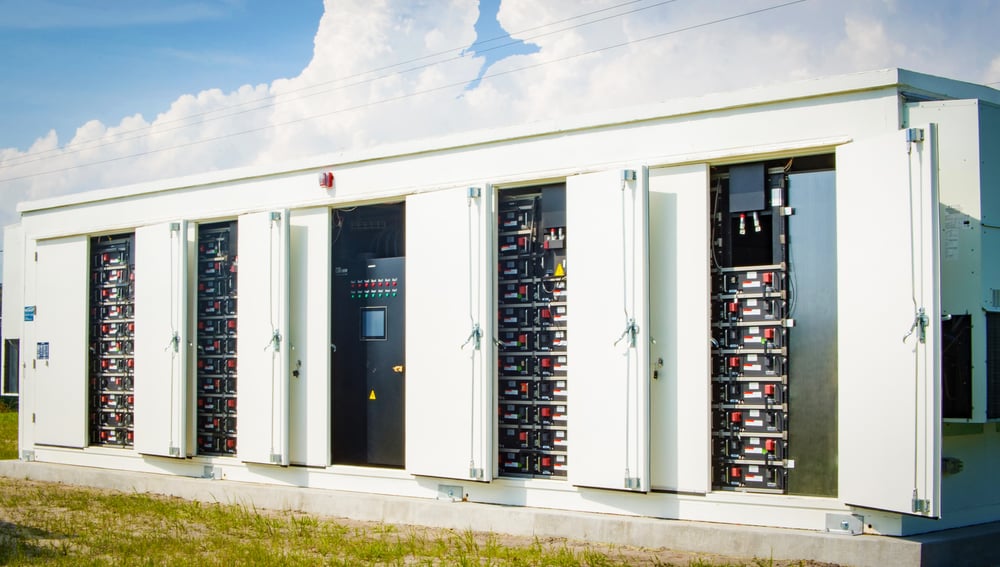
For nearly 15 years, Convergent has gained deep expertise by working closely with businesses, communities, and utilities to take the hassle out of on-site renewables by financing, building, owning, and operating these systems on our customers’ behalf.
Schedule a free, no-obligation introductory call with our team today to explore how we can support your energy goals.

Katie Guerry serves as Convergent’s Senior Vice President, Regulatory and Government Affairs. Katie’s 19-year energy market career includes diverse commercial, legal, risk, and regulatory experience in North America supported portfolios of diverse commodities and technology types including wind, solar, DR, DER, energy storage, EV charging, natural gas, and oil. Katie has twice served as Chair and Vice-Chair of PJM Member’s and Liaison Committees and provided expert testimony for Federal and State agencies.